Protein for Women Over 50: How Much You Really Need to Protect Muscle & Metabolism
The Nutrient That Changes Everything After 50
If you could focus on just one nutrition change after 50, protein would be it. It's the building block your body uses to preserve muscle, support your metabolism, keep you feeling full, and help you stay strong and independent as you age. And here's the catch: most women over 50 aren't getting nearly enough.
Why Protein Becomes More Important With Age
You lose muscle more easily
Starting around age 30, we gradually lose muscle mass, and that loss tends to accelerate through menopause as estrogen declines. Since muscle is metabolically active tissue — it burns calories even at rest — losing it makes weight management harder and can leave you feeling weaker and more tired.
Your body uses protein less efficiently
Older bodies are a little less responsive to protein, meaning you need a bit more of it (and well distributed through the day) to get the same muscle-building benefit a younger person would. This is exactly why the standard "minimum" recommendations often fall short for women in this stage of life.
Protein helps in other ways too
How Much Protein Do You Actually Need?
While individual needs vary, many experts suggest women over 50 aim for meaningfully more than the bare-minimum guidelines — often in the range of roughly 1.0 to 1.2 grams of protein per kilogram of body weight per day, and sometimes more if you're active or strength training.
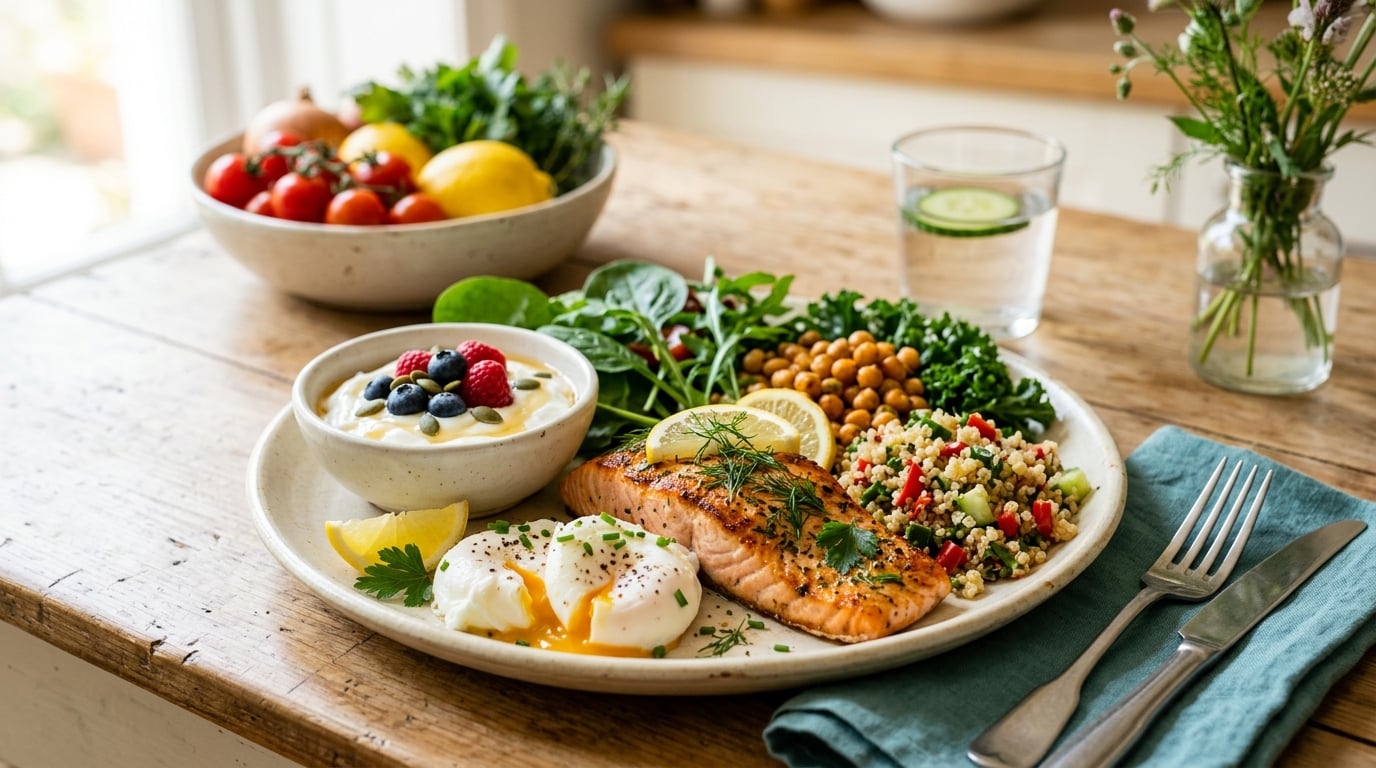
As a simple, practical target, many women do well aiming for 25–30 grams of protein at each meal. That's a more useful goal than tracking a single daily number, because spreading protein across the day helps your body use it best.
> Always tailor nutrition to your own health needs and check with your doctor or a dietitian if you have kidney concerns or other conditions — this is general education, not personalized medical advice.
Free: The 5 Metabolism Mistakes Women Over 40 Make
Get the guide that shows you what actually works—no extreme dieting required.
Get the Free GuideWhat 25–30 Grams of Protein Looks Like
The Most Common Mistake: A Skimpy Breakfast
Many women eat little or no protein at breakfast — toast, cereal, fruit, or just coffee — then try to "catch up" at dinner. But your muscles benefit most from protein spread evenly through the day. A protein-rich breakfast also steadies your energy and appetite, so you're less likely to reach for sugary snacks mid-morning.
Easy high-protein breakfast ideas
Simple Ways to Hit Your Target
1. Start every meal by planning your protein first, then build the rest of the plate around it.
2. Keep convenient options on hand — Greek yogurt, eggs, canned fish, edamame, a quality protein powder.
3. Add a protein source to snacks, not just meals.
4. Pair protein with strength training — the two together are what actually build and preserve muscle.
Protein Alone Isn't Magic — Pair It With Movement
Eating enough protein gives your body the raw material to maintain muscle, but strength training is the signal that tells your body to keep that muscle. Together, they're one of the most powerful combinations for staying lean, strong, and energetic after 50. You don't need a gym — resistance bands, dumbbells, or bodyweight movements at home are enough to start.
The Bottom Line
Protein isn't just for athletes — it's foundational for every woman who wants to stay strong, capable, and metabolically healthy after 50. Aim for a solid serving at each meal, don't skip it at breakfast, and pair it with regular strength training. It's a simple shift that pays off in energy, strength, and confidence for years to come.

Written by the founder of Menopause Metabolism
Early menopause survivor since age 38 • 20+ years of research and real-life experience
Want More Tips Like This?
Get the free guide and start your metabolism transformation today.
Ready for a Complete Reset?
The 7-Day Metabolism Reset gives you everything you need to transform how you feel in just one week.
Learn More